
فهرست مطالب
ToggleExtruder Screw: Functions, Features, and Price Factors
What Is an Extruder Screw?
The extruder screw is one of the most important components in the plastic manufacturing industry and extrusion processes. With its unique design, it enables the production of plastic products in a wide variety of shapes and sizes. Thanks to its high efficiency and capability to handle complex processes, the extruder screw is widely used in industries such as pipe, film, profile, and filament production.
In this article, we will review the main features, advantages, and applications of the extruder screw and explain its importance in modern industries.
Definition and Key Functions
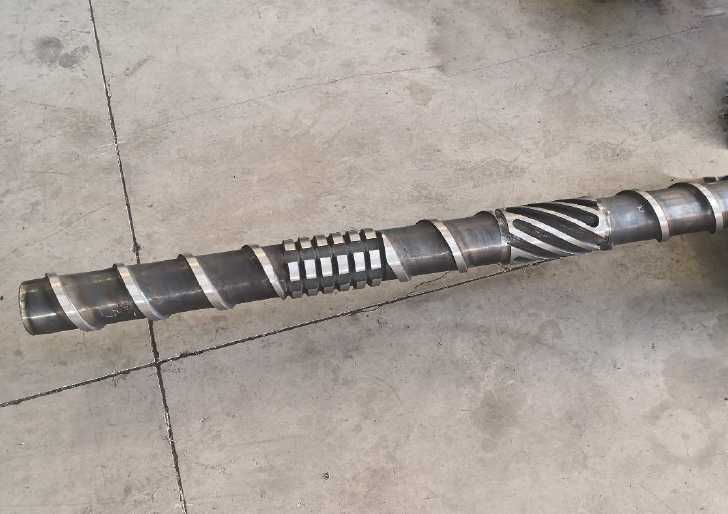
The extruder screw is a helical component inside the extrusion machine, designed for melting, mixing, and processing polymer materials. This cylindrical, screw-shaped part runs along the barrel—from the feeding section up to the die—performing multiple operations. Its key roles include:
Material Conveying and Processing
The screw conveys material forward while enabling heating, melting, mixing, and directing molten material toward different machine sections such as the head or screen changer. This results in improved consistency and quality of the polymer.Durable Design and Materials
Due to the high pressure and heat involved, screws are typically made from hardened steel to prevent brittleness and ensure long service life. This reduces maintenance costs and enhances productivity.Rotational Functionality
The screw’s rotational motion enables mixing, homogenization, and efficient melting of materials. Its geometry—pitch, channel depth, compression ratio, and length-to-diameter ratio—directly impacts extrusion performance.Length-to-Diameter Ratio (L/D)
One of the most critical parameters is the L/D ratio, which determines melting efficiency and material homogeneity. A properly designed L/D ratio significantly influences product quality and processing efficiency.Degassing and Vacuuming
During extrusion, screws may include venting sections that remove trapped air, gases, or unwanted volatiles. This improves the overall quality of the final product.Extruder Barrel
The barrel houses the screw and provides heat transfer to the polymer. Proper temperature control in the barrel ensures uniform melting and efficient processing.
In summary, the extruder screw is a sophisticated, high-precision component that performs essential operations such as feeding, compressing, degassing, and mixing. Its design and material selection play a decisive role in product quality and machine performance.
Factors Affecting the Price of Extruder Screws
The price of an extruder screw is influenced by multiple technical and manufacturing factors that determine its durability, efficiency, and application. The most important include:
Material Composition
The choice of material—commonly stainless steel or hardened steel—affects durability against pressure, heat, and wear. Special alloys or corrosion-resistant materials (for medical or food-grade applications) increase costs.Design and Complexity
More complex designs, such as twin-screw or customized screws, require advanced engineering and precision, resulting in higher manufacturing costs.Length and Diameter
Larger screws with greater length and diameter are more expensive due to the increased material and precision required for high-capacity processing.Manufacturing Process
Advanced processes like CNC machining or precision casting raise costs due to higher accuracy and production time.Wear Resistance and Service Life
Applying special surface coatings such as nitriding or hard chrome increases resistance to abrasion, extending screw life but also raising cost.Number of Screws
Single-screw extruders are simpler and cheaper, while twin-screw designs—used for more controlled mixing—require higher precision and thus cost more.Customization Level
Screws designed for specialized processes or unique product requirements are more expensive than standard versions due to custom engineering and production.Application Environment
Screws used in high-temperature, chemically aggressive, or highly demanding conditions require special materials and designs, which increase cost.Special Features
Additional properties—such as corrosion resistance, high-pressure tolerance, or integrated temperature and pressure control systems—add to complexity and final price.
Technical Specifications of a Single-Screw Extruder Machine
Diameter
100mm
115mm
120mm
140mm
155mm
180mm
Motor Power
45-55KW
55-75KW
75-90KW
110-132KW
132KW
315KW
Length-to-Diameter Ratio (L/D)
28-30-33
31
31
32
30
33
33
Rotation Speed (RPM)
55-90
55-90
45-80
45-80
45-80
45-80
Production Capacity per Hour
120-150Kg/Hr
150-200Kg/Hr
200-300Kg/Hr
350-400Kg/Hr
400-500Kg/Hr
800-1000Kg/Hr
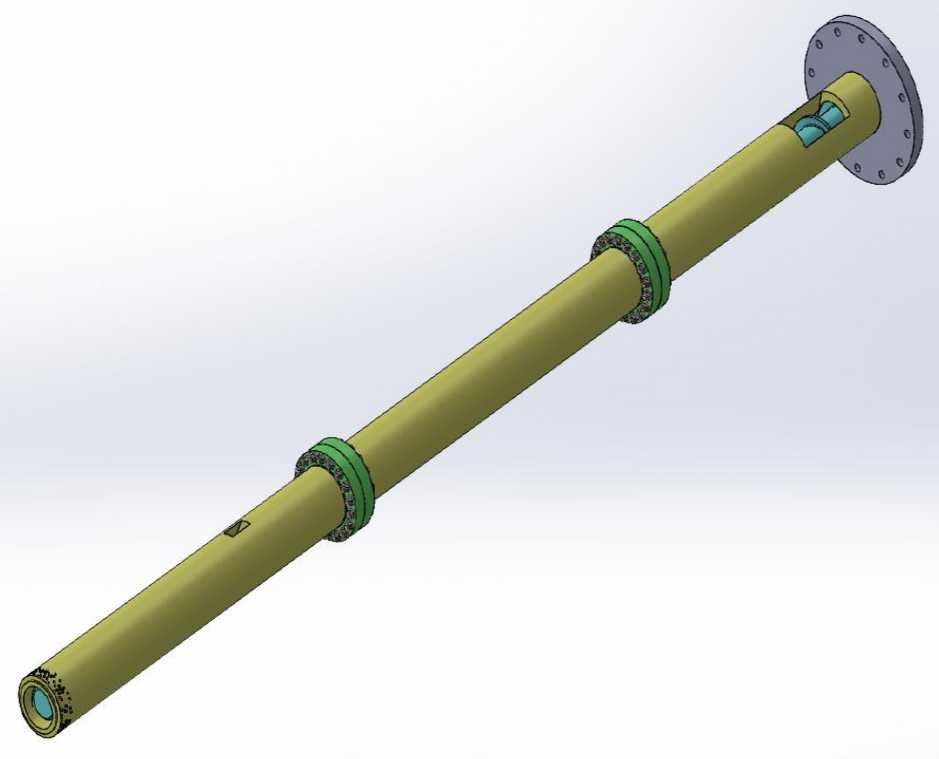
Key Features of the Barrel and Screw in the Manufactured Extruder Machine
Extruder Barrel and Screw Features
The designed and manufactured barrels and screws are equipped with degassing capability.
They include various mixing elements for better compounding of materials.
Products produced by these machines have superior clarity and no material burning compared to similar devices.
Thanks to the special design of the barrel and screw, the machines achieve high production capacity with low power consumption.
The manufactured extruder screws and barrels are hardened using induction hardening processes.
Types of Extruder Screws
Extruder screws are classified according to the type of material and extrusion process. Each screw type is designed for a specific application to ensure optimal performance in various production processes. The main types are:
1. Single Screw Extruder
One of the most common and simplest types, consisting of a single helical screw that conveys material from the hopper to the die.
Features:
Simple and cost-effective
Suitable for low-viscosity materials
Moderate production capacity
2. Twin Screw Extruder
Designed for more complex processes, using two screws positioned in parallel (coaxial) inside the barrel. Commonly used for high-viscosity polymers, better homogenization, and more demanding applications.
Features:
Excellent homogenization of materials
Higher processing speed
Suitable for high-viscosity polymers
Widely used in pharmaceuticals, polymer compounding, and food industries
3. Co-Rotating Twin Screw Extruder
In this type, the two screws rotate in the same direction, pushing material forward in a uniform manner. This design enhances mixing and reduces pressure.
Features:
Better heat transfer and mixing
Suitable for temperature-sensitive materials
Enables more precise process control
4. Counter-Rotating Twin Screw Extruder
Here, the screws rotate in opposite directions. This design generates higher pressure and optimized material flow, ideal for intensive mixing processes.
Features:
Suitable for special material formulations
Widely used in plastics and composites
Provides higher mixing intensity due to counter-rotation
5. Customized Screws
Screws can be custom-designed depending on process requirements and material characteristics. Parameters such as length, diameter, pitch, and channel depth can be tailored for maximum efficiency.
Features:
Optimized for specific processes
Enhanced production performance
Flexible design for best product quality
Conclusion
The extruder screw plays an indispensable role in the advancement of plastics and extrusion industries. Its use improves product quality, increases efficiency, and reduces production costs. As Henry Ford once said:
“Nothing is particularly hard if you divide it into small jobs.”
The extruder screw exemplifies this principle, driving innovation and progress in multiple industries.
FAQs
1 – How is an extruder screw manufactured?
The manufacturing process involves advanced steps using heat- and pressure-resistant alloys. After shaping, the screw undergoes heat treatment and precision finishing to achieve high accuracy and performance.
2 – What is the difference between the barrel and the screw in an extruder?
The barrel is the cylindrical chamber housing the material, while the screw is the helical element that conveys, compresses, and melts the material. The barrel provides containment and heating, and the screw performs the extrusion process.
3 – What factors affect the price of extruder screws?
Price depends on material selection (e.g., stainless steel, special alloys), dimensions, design complexity, manufacturer brand, and build quality. Additional costs may include heat treatment and quality control testing.


